Ask anyone when to visit Nepal and they will say October. Maybe spring. Never the monsoon. Rain, leeches, landslides, clouds over every mountain. Why would you?
We have spent a lot of monsoons here. And while it is not for everyone, there is a version of Nepal you only meet in the rain, and it is one of the most beautiful.
What it actually looks like
From around June to September, the monsoon sweeps up from the south. It rarely rains all day. More often, mornings are clear or soft and grey, and the clouds build through the day until the rain comes in a heavy burst in the afternoon or at night.
And everything goes green. Not a little green. The hillsides, the terraces, the forests and the paddies turn a colour that almost does not look real. Waterfalls appear on cliffs that were dry rock in April. The air is washed clean, and on the days the clouds do part, the mountains look closer than ever.
Rice planting season
If you are here in late June or early July, look out for Asar 15, the national paddy day, when people across the country plant rice and celebrate in the mud. Farmers sing, people throw mud at each other, and everyone eats beaten rice with yoghurt. It is joyful and messy, and if you are invited to join, take your shoes off and join.
Driving through the hills and valleys in this season, you will see people working the terraces in every direction, bent over in the water. It is the rhythm of the country, and you rarely notice it in the dry months.
Where to go
Rain shadow valleys
The big secret: the high valleys behind the Himalaya, like Upper Mustang and parts of Manang, sit in a rain shadow. The mountains block most of the monsoon, so these areas stay relatively dry while the rest of the country gets soaked. Monsoon is actually one of the best times for Upper Mustang.
The catch is getting there. Roads through the lower hills can be affected by landslides, so give yourself buffer days.
Kathmandu and Pokhara
Both cities are very livable in the monsoon. Pokhara in particular gets a lot of rain, but the lake under heavy clouds has its own mood. Fewer tourists, quieter cafes, better room rates.
Short hikes and culture
Rather than long treks, think about day hikes around the Kathmandu Valley, cultural trips, cooking classes, and festivals. Teej, Janai Purnima and Gai Jatra often fall in the monsoon months.
The honest downsides
We are not going to pretend it is perfect.
- Mountain views are often hidden for days. If seeing Everest is the whole point of your trip, come in autumn.
- Leeches on lower forest trails. Long socks, salt or leech socks, and a sense of humour.
- Landslides can close roads, sometimes for hours, sometimes for days. Always build in buffer time and do not plan an international flight the day after a long road journey.
- Flights to mountain airstrips are cancelled more often because of cloud.
- Chitwan and the Terai get hot and very wet, and some parts of the park close.
How to travel it well
- Keep your plans flexible. Monsoon travel is not the time for a tight schedule.
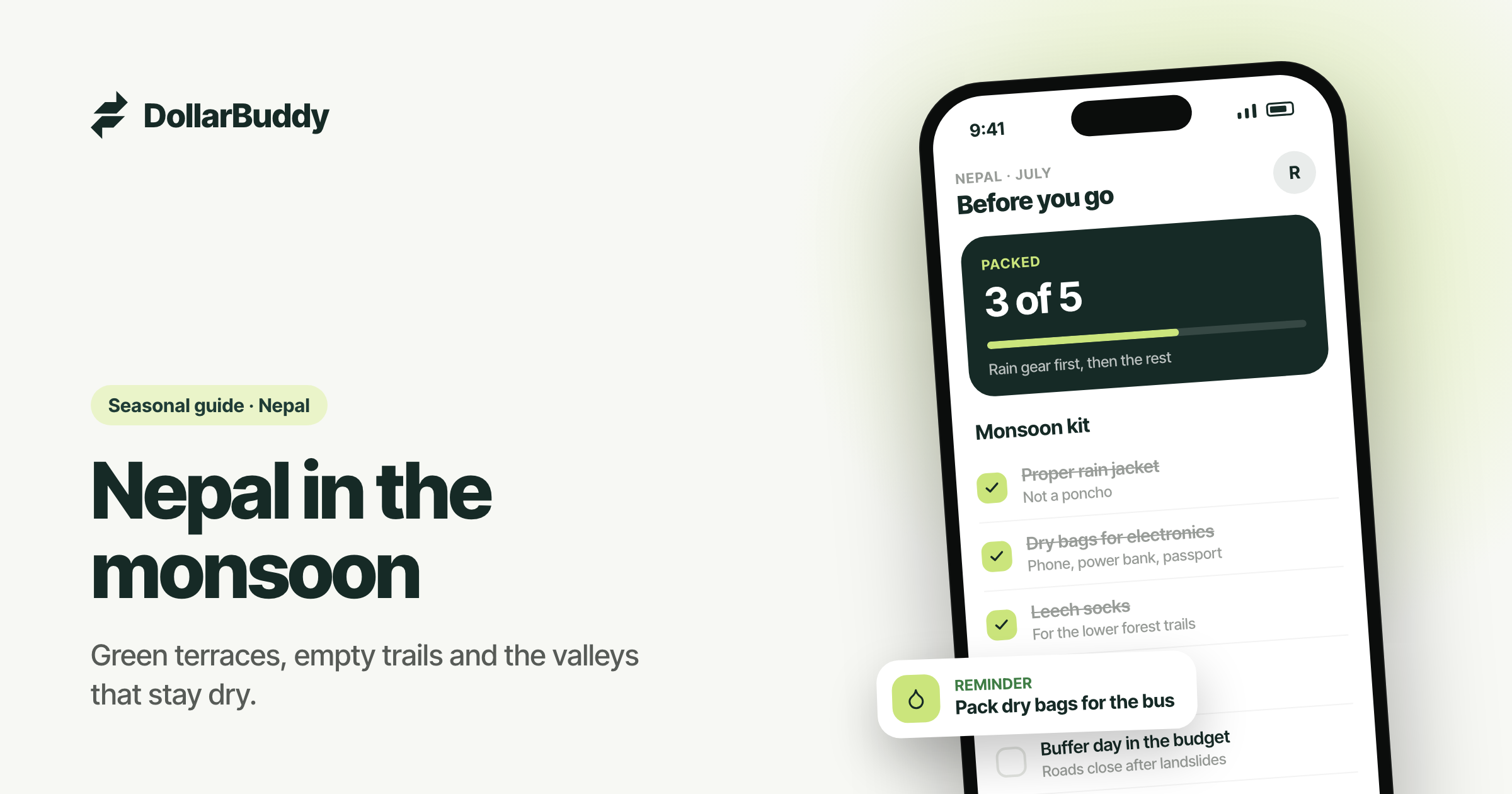
- Pack for wet. A proper rain jacket, a pack cover, dry bags for electronics, and quick-dry clothes. Cotton jeans will never dry.
- Travel in the morning. Start road journeys and hikes early, before the afternoon rain.
- Check road conditions locally before long drives. Drivers and hotel staff usually know.
- Budget for delays. An extra night because a road closed is a real cost. Put a line for it in your budget from day one so it does not wreck the rest of the trip.
The quiet reward
The monsoon gives you a Nepal with fewer people, lower prices, and a landscape at its most alive. You trade guaranteed mountain views for green valleys, mud festivals and evenings listening to rain on a tin roof with a cup of tea.
For a lot of us who live here, that is not a compromise. That is home.
Frequently Asked Questions
- When is the monsoon in Nepal?
- Roughly June to September, with the heaviest rain usually in July and August. Timing varies from year to year.
- Can you trek in Nepal during the monsoon?
- Yes, with planning. Rain shadow areas like Upper Mustang and parts of Manang get far less rain. Lower trails are wet, slippery and full of leeches, and mountain views are often hidden by cloud.
- Is it cheaper to travel in Nepal in the monsoon?
- Usually. Hotels and guesthouses in tourist areas often offer lower rates outside peak season, and you have more room to negotiate.