Nepal · Annapurna
Annapurna Base Camp Trek on a Budget: Where the Money Actually Goes
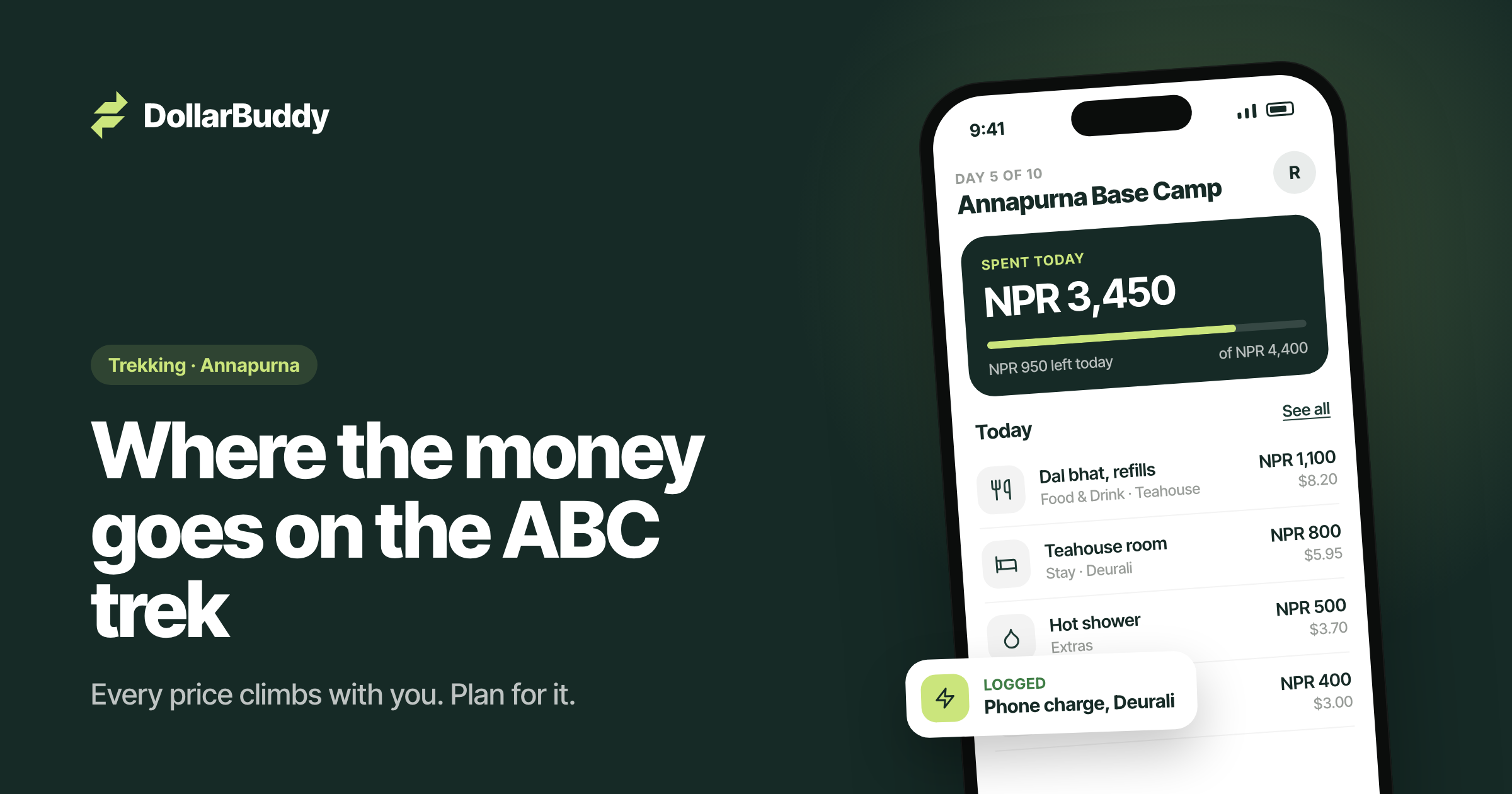
The first time you trek to Annapurna Base Camp, you will probably do the budget the way everyone does. Permit, guide, a rough daily number for food and rooms, done.
Then on day four, somewhere above Chhomrong, you will pay for a hot shower, a phone charge and a pot of tea, and you will do the maths in your head and quietly re-plan the rest of the trek.
This is the post we wish someone had handed us before that moment.
The trail, quickly
ABC takes you into the Annapurna Sanctuary, a high basin surrounded on almost every side by mountains: Annapurna I, Annapurna South, Hiunchuli, Gangapurna and the fishtail peak of Machhapuchhre. Most people start from the Pokhara side, with jeeps now reaching further up than they used to, then climb through villages like Jhinu and Chhomrong, through rhododendron and bamboo forest, past Deurali and Machhapuchhre Base Camp, and finally up to ABC itself.
The thousands of stone steps around Chhomrong are the part everyone remembers. Down, then up, then down again. Your knees will have opinions.
Standing at base camp at sunrise, with the whole wall of Annapurna catching light in front of you, is the part you will remember longest.
Where the money goes
Permits and the guide
You need an ACAP (Annapurna Conservation Area Project) permit. Since 2023, Nepal has also required foreign trekkers to trek with a licensed guide in most areas. That makes the guide one of the largest single costs of the trip, and it is worth paying for a good one. A guide who knows which teahouse has the warm dining room and which one has the reliable water is quietly saving you money every day.
Check the current permit fees and guide rules before you go. They have changed more than once in recent years.
Food: the altitude tax
This is the big one. Every kilo of rice, every gas cylinder and every egg above the road head is carried up on someone's back or a mule. So food prices climb with you, step by step. The same plate of dal bhat that costs very little in a lower village can cost several times more near base camp.
How to handle it:
- Eat dal bhat. It is usually one of the best value meals on the menu, and in most teahouses refills are included. It is also exactly the fuel your body wants.
- Eat where you sleep. Teahouses often price rooms low on the expectation that you eat dinner and breakfast with them. That is a fair deal. Keep it.
- Go easy on imported treats. A chocolate bar near base camp is not the same price as in Pokhara. Bring a few from the city.
The small extras that add up
These are the ones that catch people out:
- Hot showers, charged separately in many places.
- Charging your phone or power bank, often per device or per hour.
- Wi-Fi, usually a paid card, and often slow.
- Boiled or filtered water, charged by the litre or bottle.
None of these are expensive on their own. Together, over ten or eleven days, they can easily add up to a whole extra day's budget.
What we do now: carry a decent power bank, bring a filter bottle or purification tablets, and decide in advance that hot showers are a treat for specific nights rather than a daily habit. Above a certain altitude it is too cold to enjoy one anyway.
Cash, cash, cash
There are no ATMs on the trail and cards are rarely accepted. Withdraw in Pokhara. Then add a buffer, because weather delays, an extra rest day or a jeep on the way down are not things you can pay for with a card.
Carry small notes. Teahouses near the top do not always have change for big ones.
A rough way to plan the number
We will not give you a single figure, because your trek depends on your guide, your pace and your season. But here is how to build your own:
- Fixed costs: permit, guide (and porter if you want one), transport to and from the trailhead.
- A daily amount for food and rooms that increases every day you climb, rather than one flat number.
- A line for extras: showers, charging, water, Wi-Fi.
- A buffer of one or two extra days, because mountains do not follow your plan.
- Tips for your guide and porter at the end. This is part of the budget, not an afterthought.
Log the spend in the evenings at the teahouse while you wait for dinner. It takes two minutes and there is not much else to do once the sun goes down. By the time you are back in Pokhara you will know exactly what the trek cost, which is useful for the next one.
Worth every rupee
ABC is not a cheap walk, but it is an honest one. Every price on the menu has a reason, usually a person carrying it up the same steps you are struggling on. Pay it with a good heart, plan for it properly, and spend your attention on the mountains instead of the bill.
Frequently Asked Questions
- Do I need a guide for Annapurna Base Camp?
- Since 2023 Nepal requires foreign trekkers to go with a licensed guide in most trekking areas, including the Annapurna region. Rules can change, so confirm the current requirement before you book.
- Why does food get more expensive higher up?
- There are no roads to the upper teahouses. Rice, gas, eggs and everything else is carried up by porters or mules, so every meal reflects that effort.
- Should I carry cash on the ABC trek?
- Yes. There are no ATMs on the trail and most teahouses do not take cards. Withdraw enough in Pokhara for the whole trek plus a buffer.