Nepal · Chitwan
Chitwan National Park: What a Jungle Trip in Nepal Actually Feels Like
You come down from the hills and the air changes. It gets thick and warm, the roads flatten out, the fields go green to the horizon, and the mountains you have been staring at for a week disappear behind a haze. Welcome to the Terai.
Chitwan is a completely different Nepal from the one on the postcards, and that is exactly why it belongs on the trip.
Where to stay
Most travelers stay in Sauraha, a small town on the edge of the park, right across the Rapti River. It is built around tourism, with lodges, small restaurants and safari offices everywhere, but it still keeps a village feel once you step off the main road.
Sunset at the river is the evening ritual. People gather along the bank, the sky goes red over the water, and if you are lucky a rhino wanders out of the grass on the far side to drink. The first time it happens, everyone goes very quiet.
What to do (and in what order)
Canoe at dawn
Get on a dugout canoe on the Rapti in the early morning, while the mist still sits on the water. It is slow and almost silent. You drift past mugger crocodiles sunning on the banks, kingfishers, herons and sometimes the long thin snout of a gharial, a fish-eating crocodile that looks like something left over from another age.
Do not trail your hand in the water. The guide will tell you this. Listen to the guide.
Jungle walk
A guided walk is the most intense way to experience the park. You are on foot, at ground level, in an environment where you are not the biggest animal around. Guides read tracks, listen for alarm calls, and will tell you very clearly what to do if you meet a rhino (climb a tree or move behind a big one, and do not run in a straight line).
It is not a theme park. That is the point. Go with an experienced, licensed guide and take their instructions seriously.
Jeep safari
A jeep safari covers far more ground than walking and is the best chance for sightings deeper in the park. Half-day trips are common. Expect dust, bumps and long stretches of nothing, followed by a sudden "stop, stop, there" and a rhino standing in the grass twenty metres away, completely unbothered.
Tharu village and culture
The Tharu are the indigenous people of the Terai, and their villages around Sauraha are worth a slow walk or bicycle ride. Some lodges organise evening cultural programmes with the stick dance. Try to support community-run ones.
A word on elephants
You will see elephant rides advertised. More and more travelers, and some lodges, are moving away from them because of concerns about how the animals are trained and kept. We would skip the ride. If you want to see elephants, there are better ways: watching them bathe in the river from a distance, or visiting with a guide who can explain how they are actually cared for and asking hard questions.
When to go
- October to March: the most comfortable weather. Warm days, cooler nights. Peak season.
- February and March: after the tall elephant grass is cut, visibility in the park improves.
- April to June: very hot. Animals come to the water, but you will be melting.
- Monsoon (June to September): heavy rain, leeches, some areas close. Lush, though, and quiet.
Getting there and budgeting
Chitwan is reachable by tourist bus from both Kathmandu and Pokhara, and Bharatpur airport is nearby if you fly. Many lodges offer packages that bundle rooms, meals and activities. Packages are convenient, but compare them against booking activities separately in Sauraha, since the difference can go either way.
The costs that matter:
- Park entry fees for foreign visitors, charged for activities inside the park.
- Guides for walks and canoe rides, which are required and worth it.
- Jeep safaris, often shared, so going with a group brings the price down.
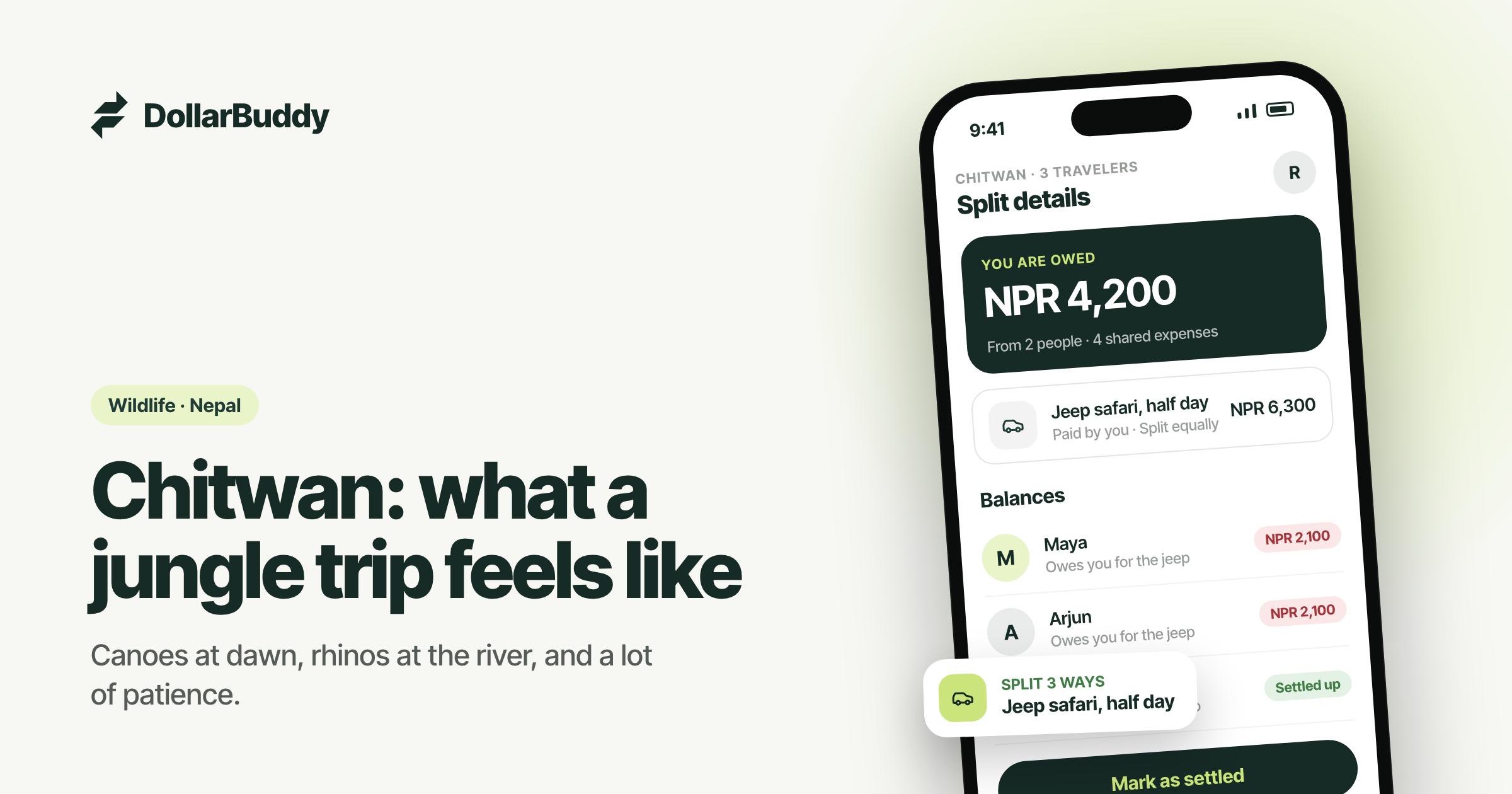
If you are sharing a jeep with friends you met on the bus, write down who paid for what that night. Shared safaris are where small amounts quietly go missing between people.
Leave a little patience
Chitwan rewards patience more than any other place in Nepal. Some drives you see nothing. Some mornings the river is empty. And then one evening you are sitting on the bank with a cold drink and a rhino walks out of the grass and stands in the gold light like it owns the place. Because it does.
Frequently Asked Questions
- How many days do I need in Chitwan?
- Two nights is enough for a canoe ride, a jungle walk and a jeep safari. Three nights gives you a slower pace and a better chance of good sightings.
- When is the best time to visit Chitwan?
- October to March is the most comfortable. Late winter and early spring, after the tall grass is cut, can be good for spotting animals. April to June gets very hot, and the monsoon brings rain and leeches.
- Will I definitely see a tiger?
- Almost certainly not, and that is fine. Tigers are rare and shy. One-horned rhinos, deer, crocodiles and a lot of birds are far more likely.