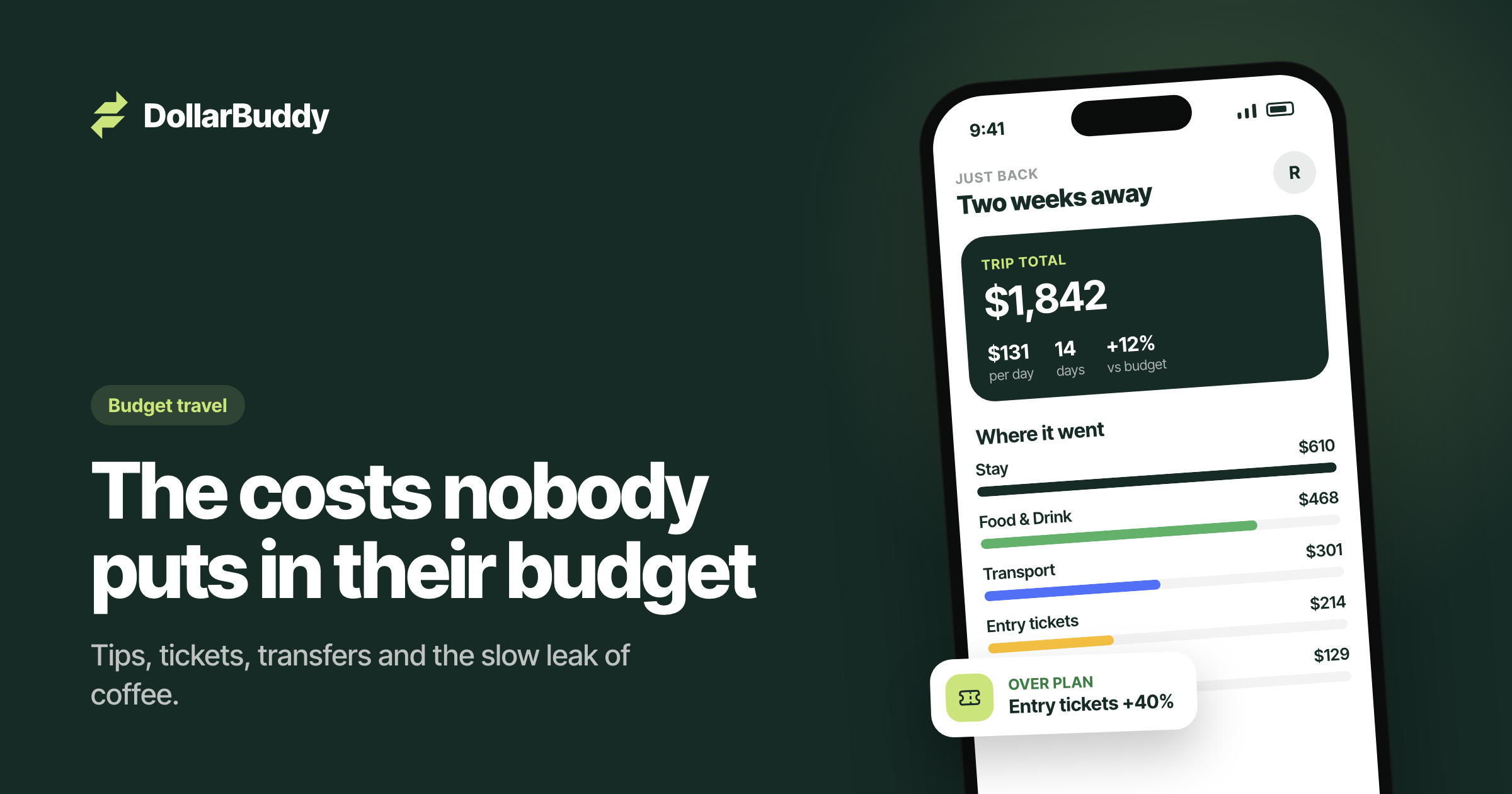
Every trip budget we have ever made has looked perfect on paper. Flights, rooms, a daily number for food. Neat. Reasonable.
And every trip has gone over. Not because of one big disaster, but because of a long list of small things we never thought to write down.
So here is that list, built from our own overspends. Add these lines to your next budget before you leave, and the end-of-trip total will stop surprising you.
1. Getting to and from the airport
You budgeted for the flight. Did you budget for the taxi to the airport at 4 am, the airport train, and the ride from the arrival airport to your hotel when you land tired at night and have no energy to figure out the bus? Transfers on both ends of every flight add up quickly.
2. Baggage
Budget airline fares often look cheap until you add a checked bag, a seat, and sometimes even a cabin bag above a certain size. Check what is included before you compare prices.
3. Visas and entry fees
Visa fees, visa-on-arrival fees, electronic travel authorisations and tourist taxes at some destinations. Easy to forget, often non-negotiable, and sometimes only payable in a specific currency.
4. Entry tickets
Temples, museums, national parks, heritage sites. In places like the Kathmandu Valley, each major site has its own fee for foreign visitors, and over a few days the tickets can cost more than your meals. Look them up and add them.
5. Tips
Restaurant tips, guide and porter tips at the end of a trek, drivers, hotel staff. Customs vary a lot by country. Find out what is normal where you are going, and set the money aside, especially for trekking, where tipping your team at the end is a meaningful part of their income.
6. Data and SIM cards
A local SIM, an eSIM, or your home roaming plan. Cheap or expensive, it is never zero, and you will need it from the first hour.
7. Water, snacks and coffee
This is the slow leak. Bottled water in hot places, a snack on the bus, a coffee every afternoon because you deserve it. Each one feels like nothing. Over two weeks, it can be a significant line. Bring a refillable bottle where the water situation allows.
8. Laundry
On any trip longer than a week, you will pay to wash clothes, or spend hours washing in a sink. Either way, it is a cost.
9. Fees on your own money
ATM fees, foreign transaction fees and bad exchange rates. A few percent on everything you spend is a real amount over a whole trip. (Always pay in local currency when the card machine asks.)
10. The things you forgot to pack
Sunscreen, a charger, a rain jacket, medicine. You will buy them at your destination, usually at tourist prices.
11. Delays and changes
A cancelled flight, a road closed by a landslide, an extra night because the weather turned. You cannot plan when it happens, but you can plan that it might. That is what the buffer is for.
12. Souvenirs and gifts
You will say you are not buying souvenirs. You will buy souvenirs. Especially for family. Give it a number now so you do not feel guilty later.
Building a budget that holds
A few habits that changed how our trips end:
- Add these categories to your plan before you leave, even with rough numbers.
- Keep a buffer of around 10 to 20 percent of the total. Bigger if the trip involves mountain roads, monsoon season or tight connections.
- Track every day. Not at the end. A quick log of what you spent each evening takes a minute, and it lets you correct early, when a small adjustment is still enough.
- Track in your home currency. Prices in a foreign currency feel unreal. Seeing everything converted makes overspending visible.
- Split as you go if you are traveling with others. Shared costs settled on the day are easy. Shared costs reconstructed from memory on the last night are how friendships get tested.
The point is not to spend less
The point is to not be surprised. A budget that includes the boring stuff lets you spend freely on the things that matter, the paragliding flight, the special dinner, the extra day somewhere you fell in love with, without that sinking feeling when you check your bank account at home.
Frequently Asked Questions
- What are the most commonly forgotten travel expenses?
- Airport transfers, checked baggage fees, entry tickets, tips, local SIM or data, visa fees and small daily extras like water and snacks are the ones people forget most often.
- How big should my travel buffer be?
- Many travelers keep a buffer of around 10 to 20 percent of the total trip budget. On trips with uncertain transport, like mountain roads in the monsoon, aim higher.
- How can I avoid going over budget on a trip?
- Budget the forgotten categories in advance, keep a buffer, and track spending daily instead of checking at the end. Small corrections early are much easier than big ones at the end.