Dubai · UAE
Money in Dubai: Dirhams, Cards, Tipping and the Tourist VAT Refund
Updated November 2026.
How do you pay in Dubai, and how do you avoid fees? Dubai is one of the easiest places in the world to spend money, which is exactly why it is worth knowing how payments work before you land. The good news: the currency is stable, cards work almost everywhere, and tourists can get VAT back on shopping. The less good news: a few fees and habits can quietly add up.
Key takeaways
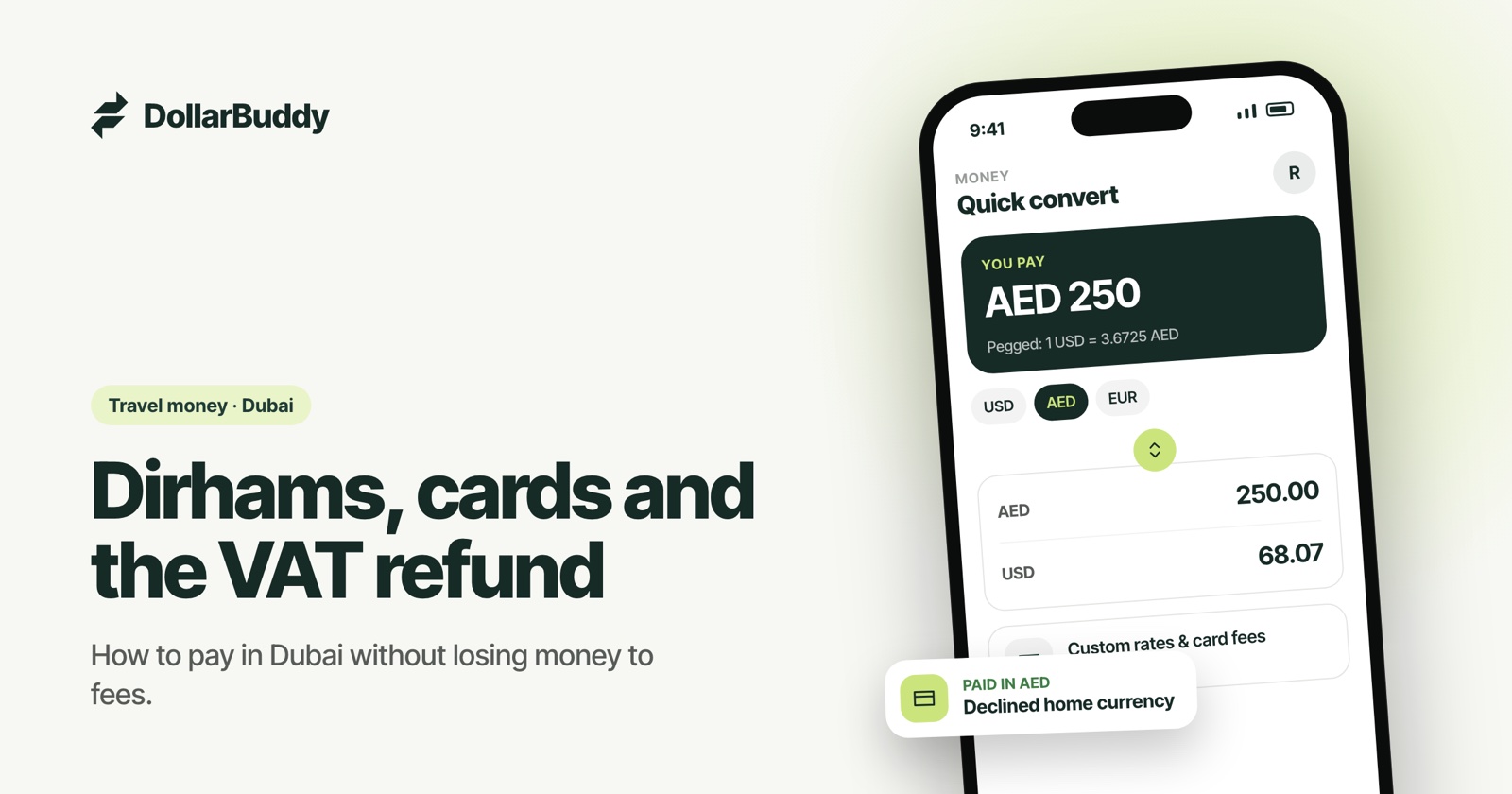
- The UAE dirham (AED) is pegged to the US dollar at 3.6725, and has been since 1997.
- Cards and phone payments work almost everywhere. Keep a little cash for abras, souks and tips.
- Always pay in dirhams. Decline "pay in your home currency" at card machines and ATMs.
- VAT is 5%. Tourists can reclaim it on eligible purchases of AED 250 or more (excluding VAT) at departure.
- Hotels add a Tourism Dirham fee of about AED 7 to 20 per room per night, plus service charges.
Dubai currency: the UAE dirham and its dollar peg
The UAE dirham has been fixed at 3.6725 dirhams to one US dollar since 1997, and the Central Bank of the UAE still publishes that same rate. For travelers this is handy:
- If you think in dollars, divide by about 3.67. AED 100 is roughly $27.
- If your home currency is not the dollar, the dirham moves exactly as the dollar does against it, so you can check one rate before you fly and trust it for the trip.
Cards or cash in Dubai?
Card acceptance in Dubai is excellent. Malls, restaurants, taxis, ride-hailing apps and supermarkets take cards and contactless phone payments as standard. The metro runs on a rechargeable Nol card, which you can top up at station machines.
Cash still has a place:
- Abras across Dubai Creek and some small souk stalls.
- Tips for drivers, porters and housekeeping.
- A backup in case a card is declined.
You do not need much. A small amount of dirhams from an ATM at the airport or in a mall covers it.
Pay in dirhams, not your home currency
When you tap or insert a foreign card, the machine may ask whether to charge you in dirhams or in your home currency. Choose dirhams. The home-currency option is called dynamic currency conversion: the merchant's provider does the conversion at its own rate, which is usually worse than what your card network would charge. ATMs can offer the same "guaranteed conversion". Decline it there too.
We wrote a longer guide to this, plus ATM fees and choosing travel cards, in Cards, Cash and ATMs Abroad.
Dubai hotel fees: Tourism Dirham, service charge and VAT
Dubai hotel bills often look bigger than the price you booked. Three things are usually involved:
- Tourism Dirham. A fee charged per room, per night, for up to 30 consecutive nights. The UAE government puts it at AED 7 to 20, depending on the hotel's category.
- Service charges and municipality fees, added by many hotels and restaurants.
- 5% VAT on top.
When you compare hotels, check whether the price shown includes these. A cheaper-looking room can end up costing the same once everything is added.
Tipping in Dubai
Tipping is appreciated but not mandatory. Before you tip at a restaurant, check the bill for a service charge, since many already include one. Where none is added, rounding up or leaving around 10% for good service is common. Small tips for taxi drivers, hotel porters and housekeeping are a nice gesture, and that is where your bit of cash comes in.
How the UAE tourist VAT refund works, step by step
The UAE charges 5% VAT, and visitors can reclaim it on eligible shopping through the official scheme run with Planet. Here is how it works, based on the Federal Tax Authority's tourist refund page:
- Shop at participating stores. Look for the tax-free signage and ask for a tax-free purchase at the till. You will need your passport. Gulf News reported about 19,340 participating stores in mid-2026.
- Meet the minimum. The official threshold is AED 250 excluding VAT per refund transaction.
- Validate when you leave. Purchases must be validated at departure, within 90 days of the invoice date. Keep the goods with you, since you may be asked to show them.
- Choose how to be paid. Take the refund to a card, or in cash at a partner exchange counter after immigration. If it goes to a card, your card issuer sets the exchange rate.
The process got faster in 2026: the FTA launched a digital, app-based platform at Dubai, Abu Dhabi and Sharjah airports, and says refunds now arrive in about one business day. Allow extra time at the airport anyway, especially in peak season.
Track it in dirhams, see it in your currency
The easiest way to stay on budget in Dubai is to log spending in the currency you actually paid, and let something else do the conversion. In DollarBuddy you log each expense in AED, and the trip total shows in your home currency. You can scan receipts, split shared costs with your group, and settle up before you fly home.
Still deciding how much to bring? Our guide to what a Dubai trip costs per day breaks it down by travel style.
Fees and refund rules can change. Check the official UAE sources linked above before you travel.
Frequently Asked Questions
- Should I pay in dirhams or my home currency in Dubai?
- Pay in dirhams (AED). If a card machine or ATM offers to charge you in your home currency, decline. That option is dynamic currency conversion, and it usually comes with a worse exchange rate than your own card would give you.
- Do I need cash in Dubai?
- Not much. Cards and phone payments work in most shops, restaurants, taxis and the metro top-up machines. A small amount of cash is handy for abras across the Creek, souk stalls and tips.
- How does the tourist VAT refund work in the UAE?
- At participating stores, ask for a tax-free purchase. The official minimum is AED 250 excluding VAT per refund transaction. Validate your purchases with Planet when you leave the UAE, within 90 days of the invoice date, and take the refund to a card or in cash.
- Is tipping expected in Dubai?
- Tipping is appreciated but not mandatory. Check your bill first: many restaurants already add a service charge. Where none is added, rounding up or leaving around 10% for good service is common.