How to Create a Travel Budget: A Step-by-Step Guide
Planning a trip is exciting — right up until you start wondering whether you can actually afford it. The good news: learning how to create a travel budget is simpler than most people think, and it's the single best way to travel further without the post-trip credit card dread.
This step-by-step guide walks you through building a realistic travel budget and, just as importantly, sticking to it once you're on the road.
1. Start with your total trip cost
Before you break anything down by day, get a rough total. List your big-ticket categories:
- Flights and transport to and from your destination
- Accommodation for every night
- Local transport (trains, buses, rideshares, rentals)
- Food and drink
- Activities and attractions
- A buffer of 10–15% for the things you can't predict
Add them up. If the number is scary, that's useful information now — not three days into the trip.
2. Turn it into a daily allowance
A single big number is hard to manage day to day. Divide your on-the-ground spending (everything except flights and pre-booked stays) by the number of days you'll travel. That gives you a daily allowance — a target you can actually feel.
If your daily allowance is $60 and you spend $40 today, you've banked $20 toward a splurge dinner or a day tour later. Budgets work best when they're flexible, not punishing.
3. Research real costs for your destination
Daily costs vary wildly by region. A day in Southeast Asia might run $30–50, while Western Europe can easily hit $120+. Check recent traveler reports, not glossy brochures, and build your allowance around real numbers.
4. Track every expense as you go
This is where most travel budgets fall apart. You set a great plan, then stop logging expenses by day two. By the end of the week you have no idea where the money went.
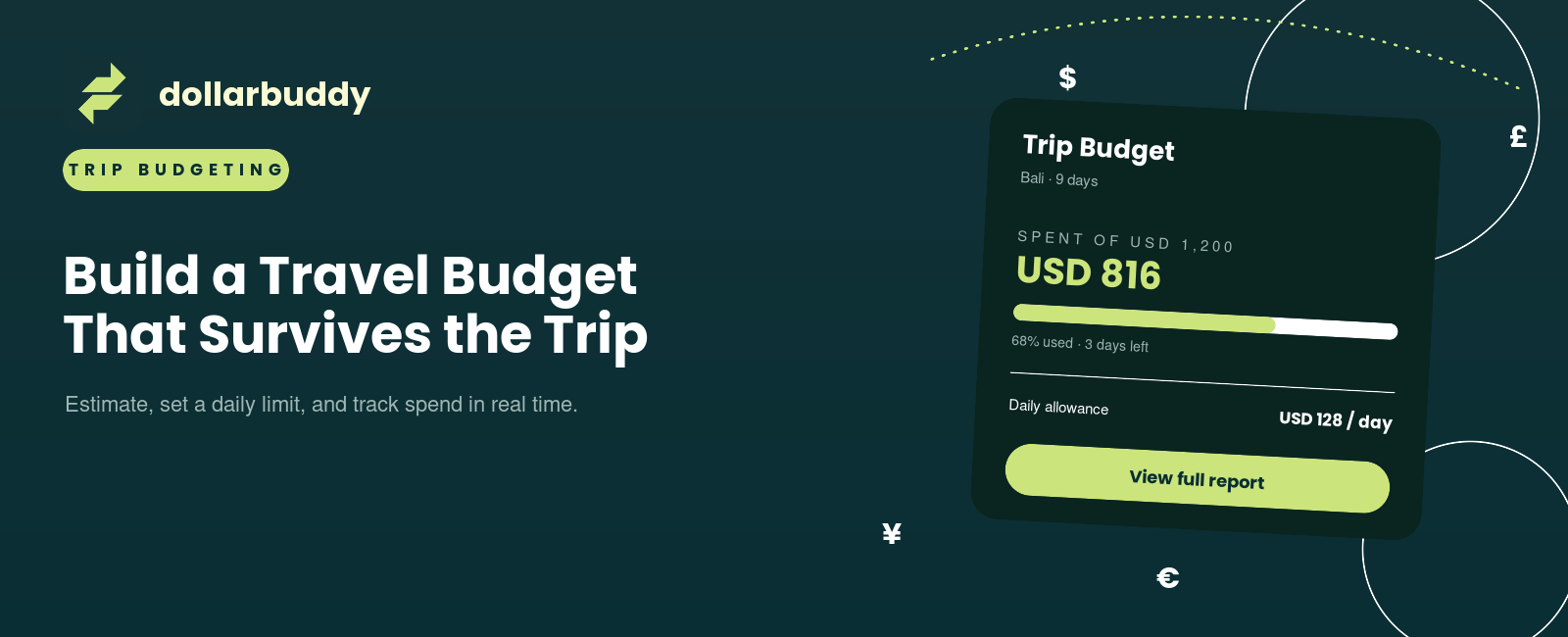
The fix is to make tracking effortless. With DollarBuddy, you log an expense in seconds, see your remaining daily allowance at a glance, and watch your trip total update automatically — even across multiple currencies.
5. Review and adjust mid-trip
Check in every few days. Overspending on food? Cook a meal or hit a local market. Coming in under budget? Treat yourself to that experience you've been eyeing. A budget you revisit is a budget that works.
The takeaway
A travel budget isn't about spending less — it's about spending on purpose. Estimate your costs, set a daily allowance, research real prices, and track as you go. Do that, and you'll come home with great memories instead of a financial hangover.
Ready to put it into practice? DollarBuddy makes building and tracking a travel budget effortless — in any currency.